JPMorgan Chase · 2025
Instant access to your mobile check deposit
Role
Lead Designer
Team
2UX Designers
1Product Manager
1UX Writer
6Engineers
Platform & Timeline
Mobile native
10 months
Impact
Projected $92M in 5-yr PTCF
Currently in development
THE PROBLEM
Mobile check deposit solved convenience, but not timely access to money.
Customers could deposit from anywhere, yet still waited several business days before the money was usable. For those who needed money sooner, third-party check-cashing services offered speed at the cost of added fees, friction, and less transparency.
of consumers want
instant access to funds
fund-availability complaints at Chase per month
average wait
for funds to clear
Insight
Customers couldn't wait 2 days, especially when rent was due.
When we asked customers why instant access mattered, we found that people weren't primarily using instant access services for rare emergencies. They needed it for everyday obligations like rent, bills, and utilities. Another common reason was even simpler: it was their money, and they didn't want to wait for it.
The research made the stakes clear. Faster access could help customers bridge real cash-flow gaps.
"Why is instant access to your funds so important?"
The challenge
Deliver speed while protecting customers and Chase.
Instant Access created a dilemma: customers needed money sooner, but the experience had to avoid making a fee-based choice feel confusing, pressured, or unfair, especially for people already under financial strain.
Chase also had to manage the risk of making funds available before a check fully cleared. That raised hard questions around fee structure, overdraft eligibility, fraud exposure, and where to place guardrails so faster access could help customers without creating unintended harm.
Solution
Instant Access makes mobile check deposits instantly available for a 2% fee.
Locate the offer on the confirmation page.
After you deposit your check, eligible customers can find the Instant Access offer right below the confirmation details. Decide before leaving the page, since the offer won't be available once you exit.
Take a partial amount or the full deposit.
Choose how much you need, part of the check or the full amount. The 2% fee applies only to what you take, with a $2 minimum. Your final payout updates as you adjust so you can decide with confidence.
Verify the amount, and you're good to go.
A final review confirms the fee and the exact amount you'll receive. Approve once, and your available balance updates instantly. Any remaining funds follow standard availability.
Impact & validation
Validated with customers. Sized for the business. Currently in development.
Research
138
participants across 3 rounds of testing
Validation
3 tests
from baseline flow to overdraft edge cases
Projected impact
$92M
in 5-year projected
PTCF (pre-tax cash flow)
Usability testing
Three rounds of testing helped us ensure Instant Access stayed clear, optional, and responsible, especially for customers in financially sensitive moments.
Phase 01
Baseline viability, standard Quick Deposit flow
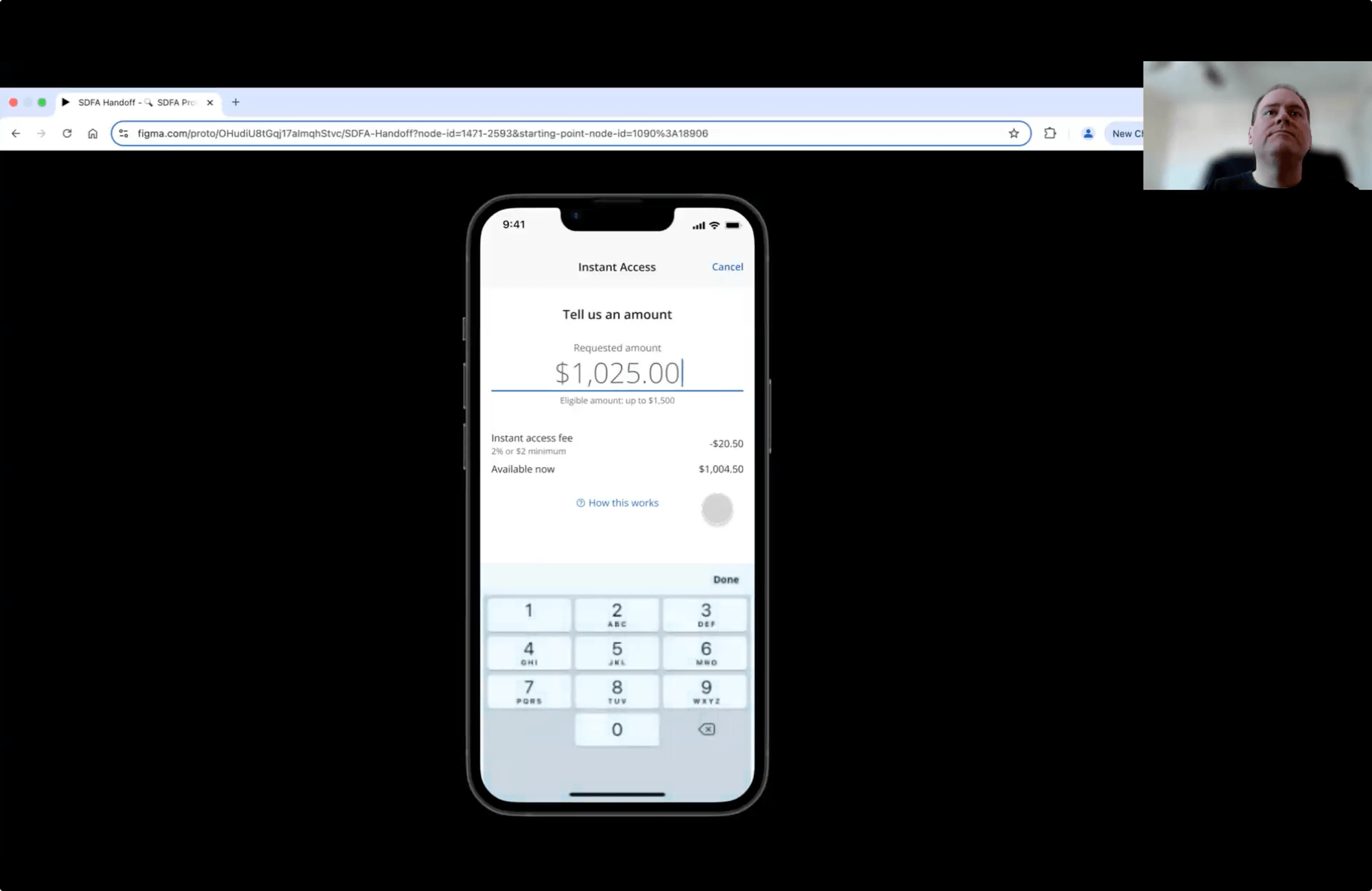
“My expectation was that I could only choose all of it. So that’s interesting. That actually gives me more flexibility than I expected.”
Instant access was broadly understood, perceived as optional, and non-alarming for general customers.
This validated the feature itself, but left the overdraft edge case untested.
Phase 02
Overdraft stress test, five messaging strategies
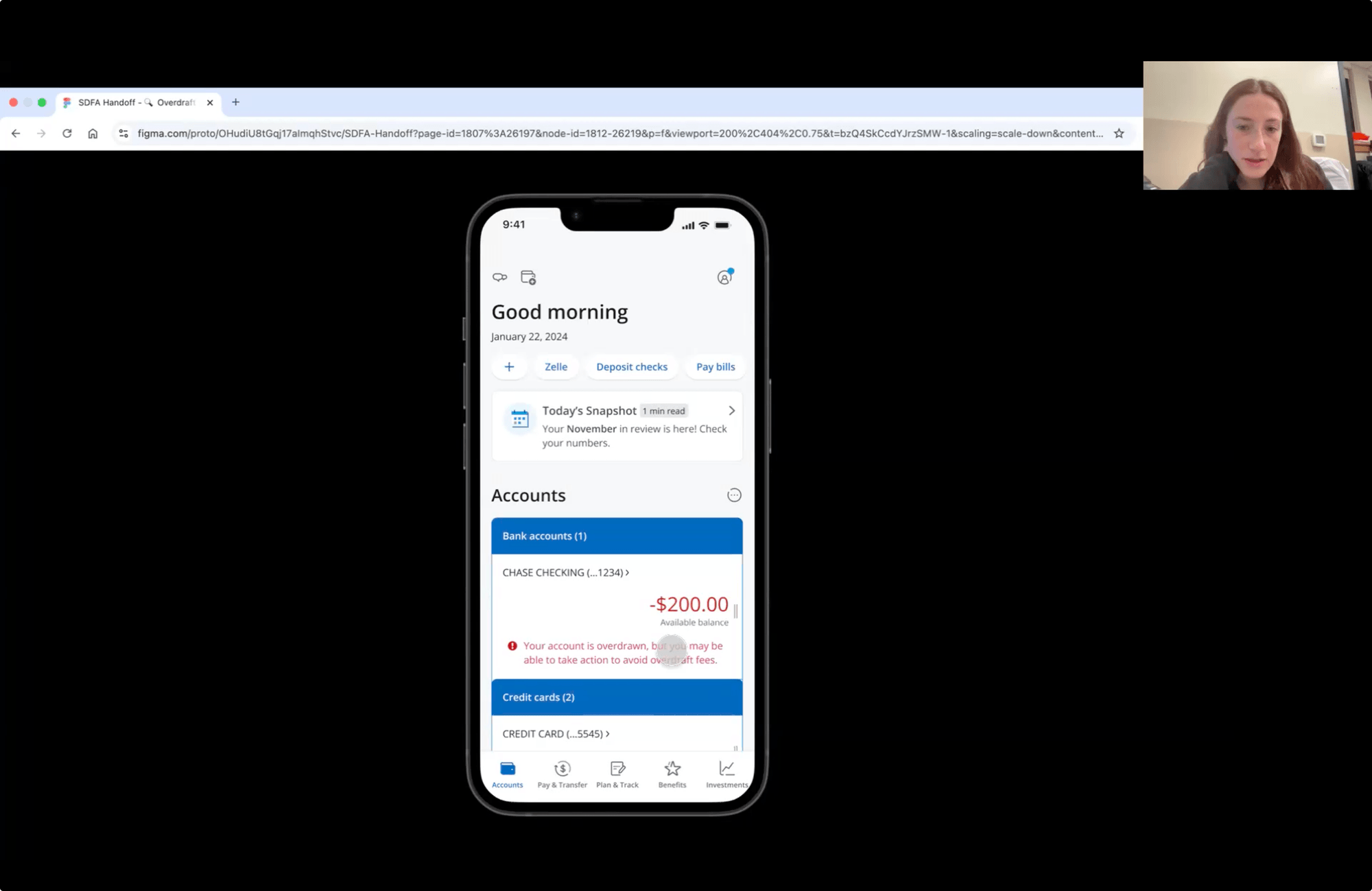
“So you’re taking a gamble. Do you bet the grace period gets extended until the funds hit, or do you pay the fee to rest assured you’ll have access and avoid the fee entirely?”
Tested five approaches, from no messaging to speedbumps, legal-approved copy, upstream warnings, and confirmation-page messaging.
The overdraft scenario exposed a deeper issue: confusion stemmed not from Instant Access, but from how overdraft timing, balances, and availability worked overall. Messaging helped, but couldn't fix the underlying system complexity.
Phase 03
Large scale overdraft stress test
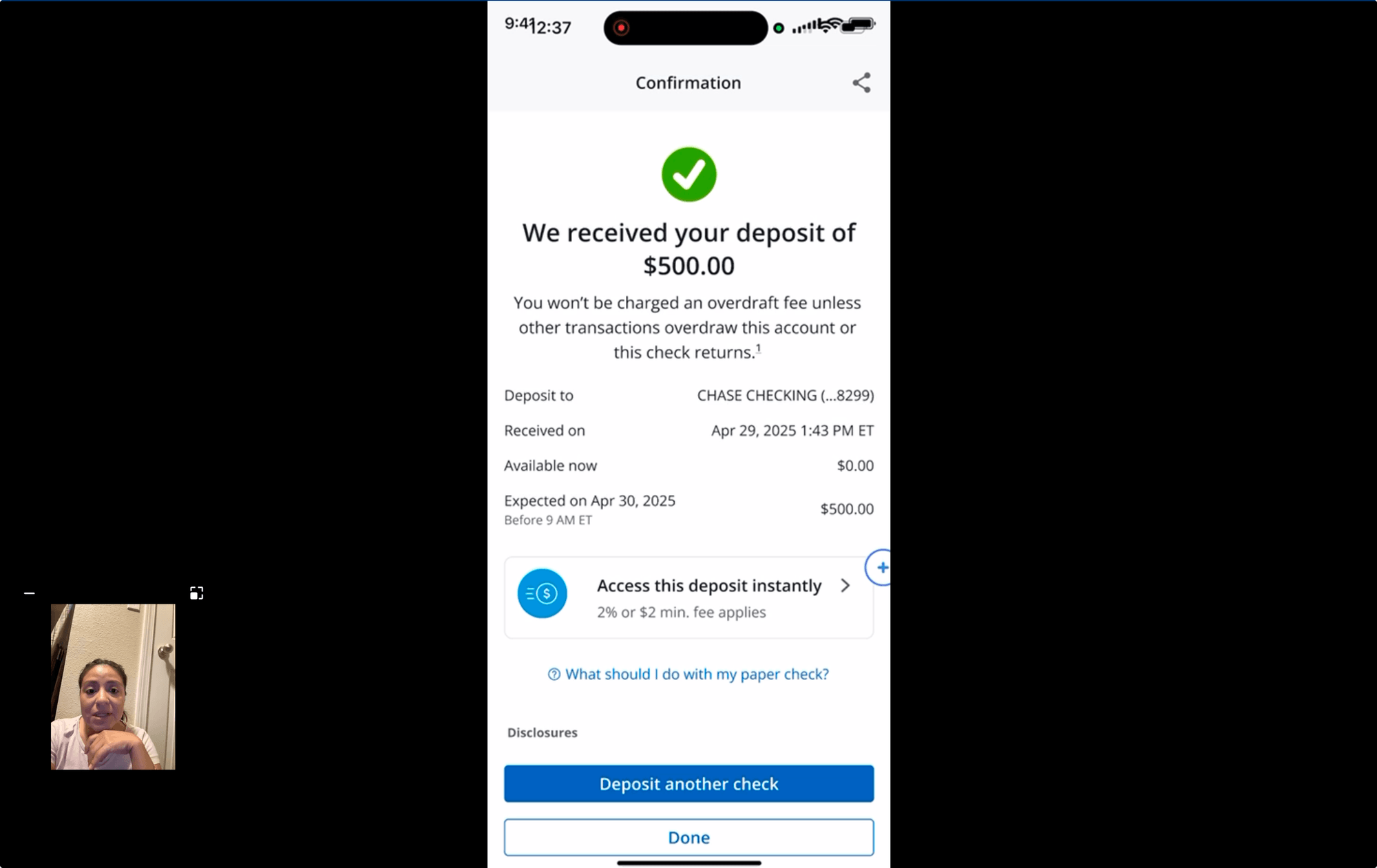
“It’s not completely clear if I needed to put the money in the account to keep the overdraft fee from happening, or to instantly access the money to keep the overdraft from happening.”
Scaled the overdraft scenario with a 120-person unmoderated study across four concepts with varied guardrails and updated account dashboard messaging.
Stronger guardrails reduced unintentional harm, but overdraft confusion persisted, rooted in issues beyond this flow. That pushed us to reconsider offering Instant Access to over-drafted customers at launch.
Key decisions
Each one traded faster access against protecting customers from a decision they might regret.
Decision 1
Set eligibility guardrails for overdrawn accounts.
Overdrawn customers were the most sensitive eligibility scenario. They may have needed faster access most, but a paid option risked adding confusion or pressure in a vulnerable moment, especially when funds would resolve a negative balance rather than give usable cash.
Testing showed many customers were already unclear on how Chase’s overdraft rules and timing worked, and that confusion extended well beyond the Instant Access flow. So rather than launch a fee-based option into a scenario customers didn’t fully understand, we recommended starting with non-overdrawn accounts, a lower-risk path that preserved the option to expand access later with stronger protections.
Decision 2
Make customers account for the fee before confirming.
Customers expected that requesting $500 meant receiving $500, so seeing less after the fee created confusion. We considered calculating the gross amount for them, but that risked making Chase appear to change the amount or nudge customers to take more than they intended. Instead, we surfaced the fee and final amount upfront so customers could adjust, continue, or wait for standard availability with a clearer understanding of the tradeoff.
Decision 3
Place the offer after deposit confirmation.
We initially considered showing Instant Access earlier in the flow, so customers could decide sooner. But testing showed that customers were looking for clear confirmation that their check deposit was complete before evaluating anything else, especially the green check mark.
Placing the offer after confirmation helped separate the two mental models:
- First: “Did my check deposit go through?”
- Then: “Do I want faster access to the funds?”
This reduced the risk of making the offer feel like an interruption, upsell, or required step in the deposit process. It also supported risk controls by avoiding an earlier eligibility signal that could let bad actors test which checks qualified for Instant Access before completing a deposit.
Explored
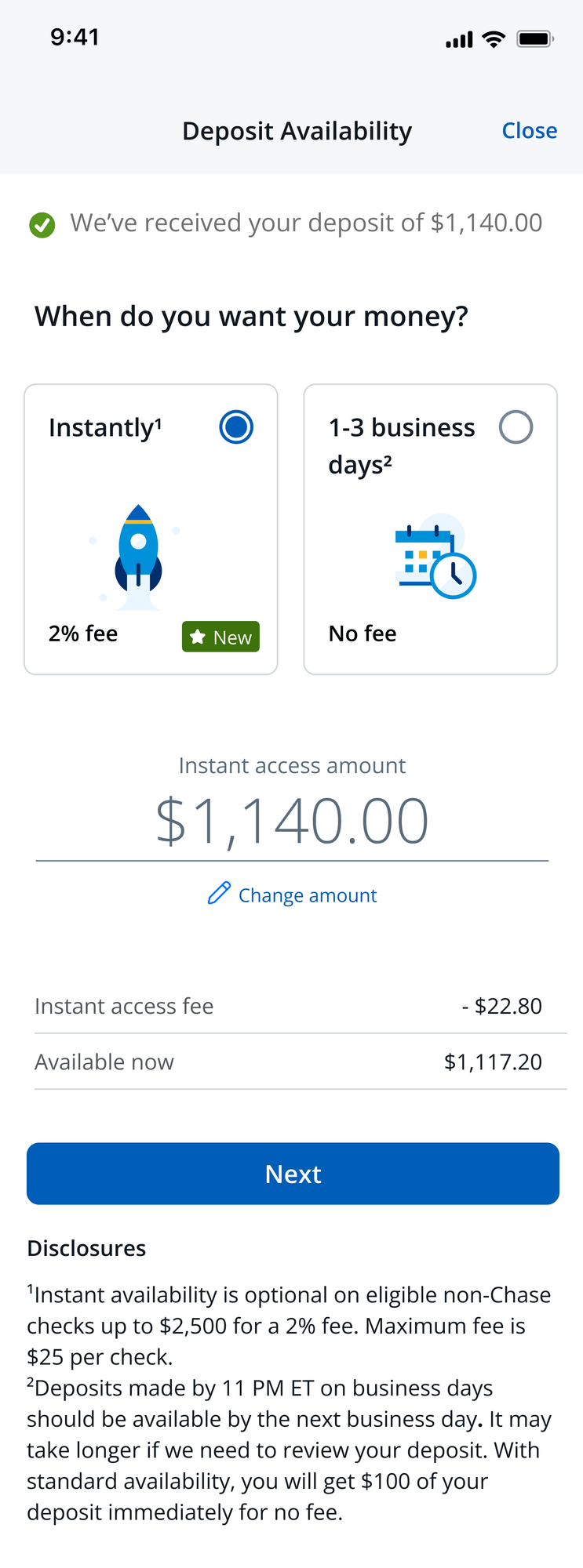
Delivered
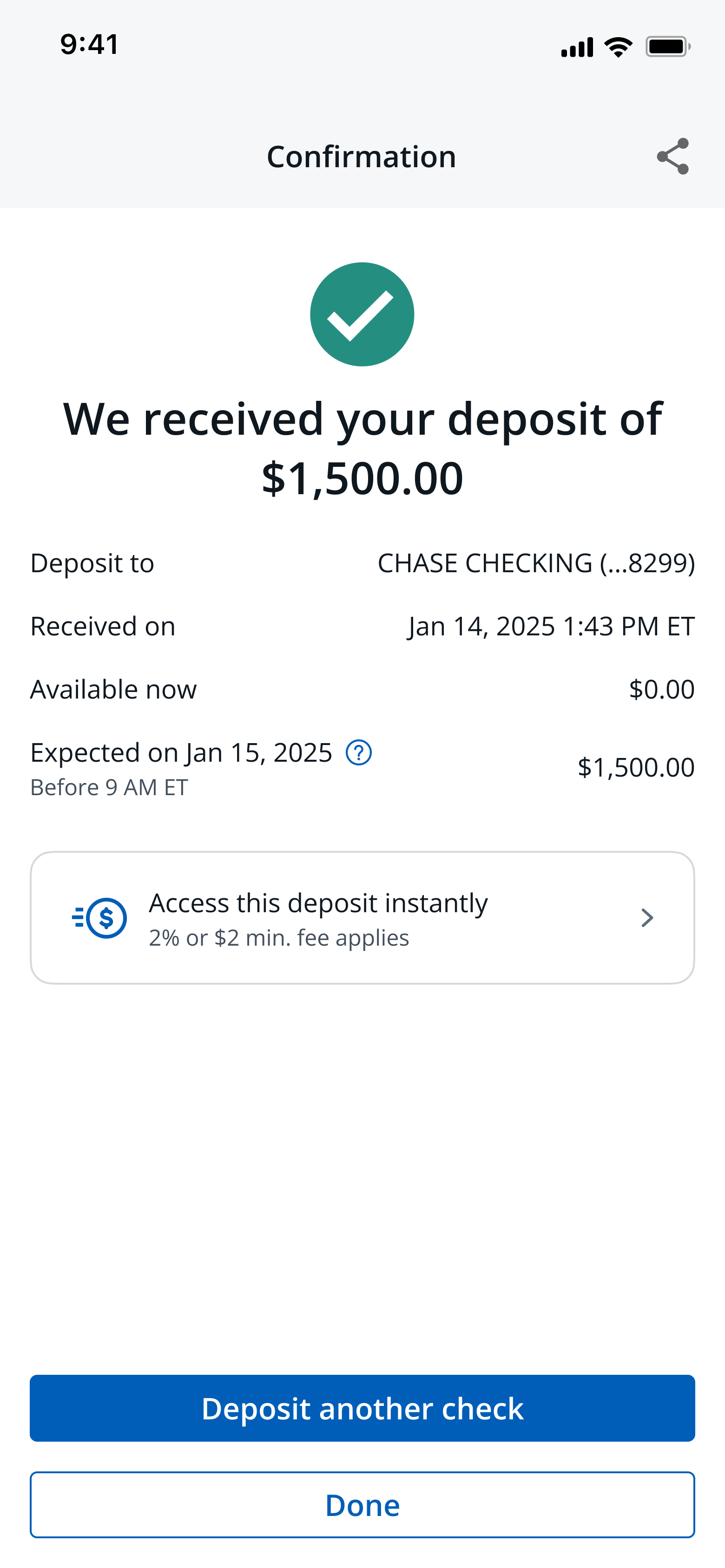 Access this deposit instantly
Reflection
Takeaways & what I’d do differently
01
In a regulated environment, legal and risk are design inputs, not obstacles.
Building a fee-based banking product meant partnering early with Legal and Compliance. Their requirements shaped the flow, so my job was making mandated language feel clear and human, protecting both the customer and the institution without sacrificing usability.
02
Research informs decisions, but it doesn’t make them for you.
Even when testing showed the overdraft experience was “confusing but not harmful,” that wasn’t enough to launch. My job was to look past surface-level results, weigh the underlying risk, and recognize when the responsible move was to slow down and protect customers rather than treat positive research as a green light.
03
I would have explored more ways to reduce fee-related math and decision friction.
We optimized for a straightforward, technically feasible approach, but customers still got stuck translating “amount I need” into “amount I’ll receive after the fee.” With more time, I’d prototype and test alternative, more creative interaction models like entering the net amount to receive, AI powered suggested amounts, and a side-by-side comparison view.